Staffnet+ >
In Living Memory Bench Installed at Penarth Park
In Living Memory Bench Installed at Penarth Park
09 February 2026
A red bench has been unveiled in Alexandra Park in Penarth as part of the British Heart Foundation’s In Living Memory campaign — a national initiative that celebrates people living with and surviving heart conditions rather than the traditional “memorial” bench.
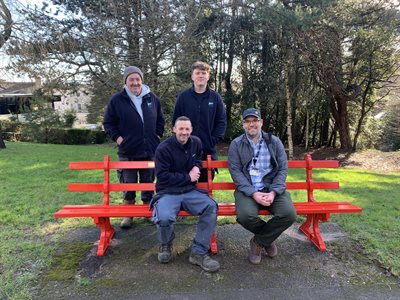 The bench installed in the park honours local resident Rhys Edwards, who survived a serious heart complication and now shares his experience to raise awareness of cardiovascular health.
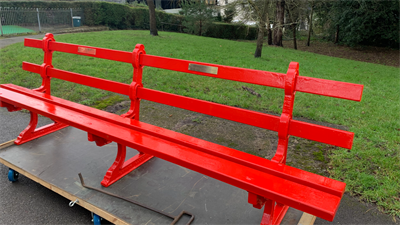
Rather than installing a brand-new bench, our very own Parks Team removed, renovated and repainted the bench in red as a permanent reminder of his story and his message to those facing similar worries and is one of the first In Living Memory benches to be introduced in Wales.
While on a work trip to New York, Rhys Edwards became very unwell with his heart in distress due to a rare virus. He underwent emergency treatment and spent nearly two weeks in a cardiac care unit before he was able to return home and begin recovery.
His experience has made him passionate about raising awareness of heart and circulatory conditions and he hope’s the new bench will help encourage conversations about heart health in the community.
More than 400,000 people in Wales are living with cardiovascular disease - and every three minutes, someone in the UK dies from the condition.
 Each year, more than 2,000 people are fitted with a pacemaker, helping to manage abnormal heart rates and/or rhythms.
Rhodri Thomas, head of BHF Cymru, said: "Rhys' story shows the true reality of living with cardiovascular disease, and we are so grateful that they are courageously sharing their experiences to help others."
"Despite being one of the UK's biggest killers, cardiovascular disease is still misunderstood or not taken seriously – and those living with it can face judgement and challenges."
"By sharing the stories of people who live with cardiovascular disease on our iconic red benches across the UK, we hope to start more conversations that change dangerous misconceptions."