End of Week Message from Liz
09 October 2026
Hi everyone,
 Today I wanted to write about the five ways of working and specifically some great examples of this approach within the Youth Service.
These principles are set out in the Wellbeing of Future Generations Act 2015 and form an important part of Vale 2030, our Corporate Plan.
They cover overarching aims for all our work, specifically:
- Long-term: Balancing short-term needs with the ability to meet long-term goals, ensuring actions taken today do not compromise future generations.
- Prevention: Acting to prevent problems from occurring or getting worse, rather than just reacting after issues arise.
- Integration: Considering how the Council's wellbeing objectives may impact upon economic, social, environmental, and cultural well-being goals holistically.
- Involvement: Involving people reflecting the diversity of the area in the decisions that affect them, including residents and local communities.
- Collaboration: Working in partnership with other public bodies, services, and local organisations (such as the Public Services Board) to deliver shared objectives.
 Recently, the Vale of Glamorgan Youth Work Strategic Plan 2027-32 was presented to Welsh Government, emphasising the long-term nature of work taking place.
The document contains six priorities that aim to improve opportunities, access and outcomes for young people across the Vale over the next five years.
These are to:
- Strengthen Welsh language and bilingual youth work.
- Improve support for young people aged 16 to 25.
- Develop services in rural areas.
- Expand digital and online youth work.
- Improve Promotion and Marketing.
- Build a Skilled and Sustainable Workforce
Overall, the plan aims to ensure that the youth service’s excellent offering will only improve over the next five years.
The goal is for all young people in the Vale to have high-quality youth work opportunities, regardless of background or where they live.
The foundations for this progress were laid last March when Council agreed to add an extra 0.5 per cent to council tax.
That money was specifically for this purpose and to improve rural bus services.
It equated to an additional £535,000 for the Youth Service, helping to expand its reach, workforce and impact across the County.
 Since then, 10 new staff have been recruited, there is now increased community-based youth provision, enhanced support for vulnerable young people and targeted mentoring.
New pre-16 and post-16 initiatives are helping young people access work experience, improve wellbeing and remain engaged in education.
Facilities have been improved, alongside expanded outdoor learning and Duke of Edinburgh opportunities, and supported projects for LGBTQ+ and home-educated young people.
Funding is also helping develop future initiatives, including a Youth Village at Pencoedtre High School offering a range of services, and major youth events.
Youth and Engagement Manager Rhys Jones and his team deserve huge credit for the effort they have put in to drastically increase the scope and quality of opportunities available to young people in the Vale.
It is a really exciting area of work that could make an enormous difference to people’s lives.
This increased investment is part of a deliberate approach by the Council to prevent more serious social, health and economic issues down the line.
That was the theme of a presentation Director of Corporate Resources Tom Bowring delivered to New Local, an independent think tank focused on unlocking community power, strengthening public services and helping to renew local government.
It highlighted rising concerns around school attendance, exclusions, emotional wellbeing and the number of young people at risk of becoming NEET (Not in Education, Employment or Training).
Research highlighted that young people who become NEET are more likely to experience poorer health, unemployment and long-term disadvantage later in life.
In response, the Council has taken action through that £535,000 investment in youth services which will:
- Help identify risk factors earlier.
- Provide targeted intervention before problems escalate.
- Offer positive activities and safe spaces for young people.
- Increase support to keep young people on education, training and employment pathways.
This preventative approach has seen the introduction of summer engagement activity and ongoing support for Year 11 leavers.
Mentoring and wellbeing support has been established for sixth form learners at risk of dropping out along with dedicated support for young people with unknown education or training destinations, including outreach and home visits.
There is now increased rural youth provision to reduce isolation, antisocial behaviour and barriers to accessing support, and the Strive 4 Success Programme targets pre-16 learners at risk of becoming NEET.
Strive 4 Success is a great example of another of the five ways of working – integration.
It is a Council programme that helps young people gain valuable work experience within the organisation while still in school, connecting them with the areas of interest that match their skills.
The scheme offers placements across a range of service areas for one or two days a week over a minimum of 12 weeks, giving pupils the opportunity to:
- Build confidence and workplace readiness
- Develop employability and transferable skills
- Explore different career options
- Gain experience in a professional working environment
- Build professional networks
- Better understand their education, training and employment options after Year 11
The scheme is designed to tackle the risk of young people becoming disengaged from education, employment or training by providing early support and meaningful workplace opportunities.
For Council departments, the scheme offers the chance to mentor young people, support the development of future apprentices and employees, and contribute to the Council's social value and community wellbeing objectives.
Overall, Strive 4 Success can start young people on a positive track while helping the Council develop a skilled and resilient workforce for the future.
Anyone wishing to know more about the scheme should contact Sarah Fraser or Naomi McGarrigle.
Council Leader Lis Burnett also visited schools to talk about the extra money that was made available to the Youth Service last spring and the opportunities it has provided.
Cllr Burnett visited St Richard Gwyn, Cowbridge and Pencoedtre High School where she discussed the budget and other areas of Council business.
Such engagement helps to involve young people in the democratic process, which is all the more important now the voting age for Senedd and Local Government elections has been reduced to 16.
Election Registration and Youth Service staff also work to ensure young people are included in the decisions that affect them, while Equalities and Communications colleagues strive to make the voices of this and other groups heard.
In order to maximise its impact, the Youth Service must work with a range of organisations, be that schools, community groups and other Council departments.
Such collaboration is a cornerstone of Vale 2030 and an approach being adopted more widely across the Council as we look to keep delivering for our residents.
Our leisure centres are a perfect and long-standing example of this as we work with management partners Legacy Leisure to deliver first-rate facilities.
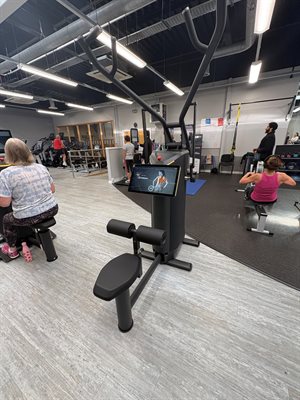 As we all know, exercise is an important part of a healthy lifestyle as it helps boost physical and mental wellbeing.
Legacy Leisure recently spent £200,000 on new cutting-edge fitness machines at Penarth Leisure Centre, with a further £120,000 investment confirmed for the near future.
The EGYM equipment uses intelligent software and automated settings to deliver fast, data-driven, and personalised strength and flexibility workouts.
This is part of ongoing improvements being made at our leisure centres, with Barry also receiving new equipment last year.
It shows what can be achieved through effective partnership working towards a shared purpose.
Combined these examples show how the Council is making real strides towards its corporate and wellbeing objectives as we continue developing Strong Communities with a Bright Future.
Thanks you all for your work his week – it is always appreciated.
Diolch yn fawr iawn,
Liz